
How highways are paving the road to hell
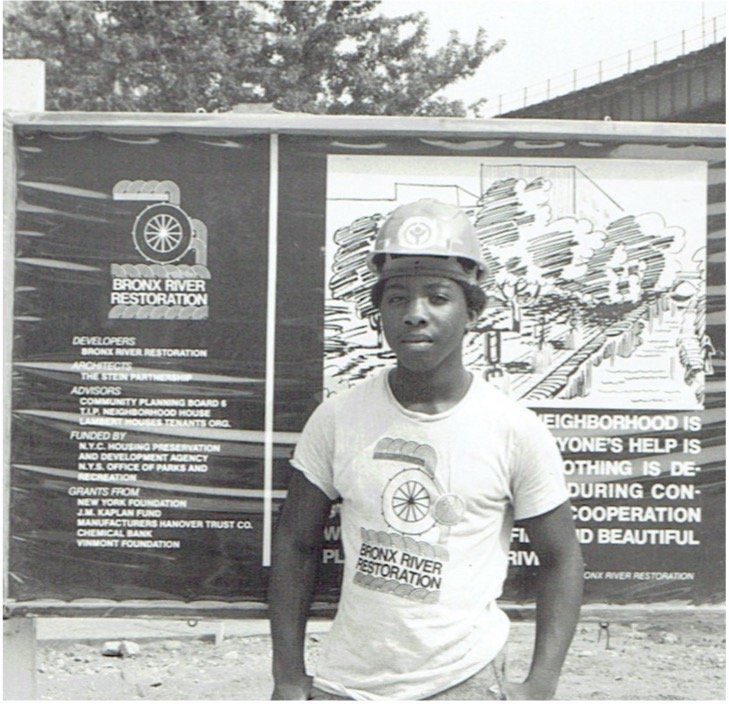
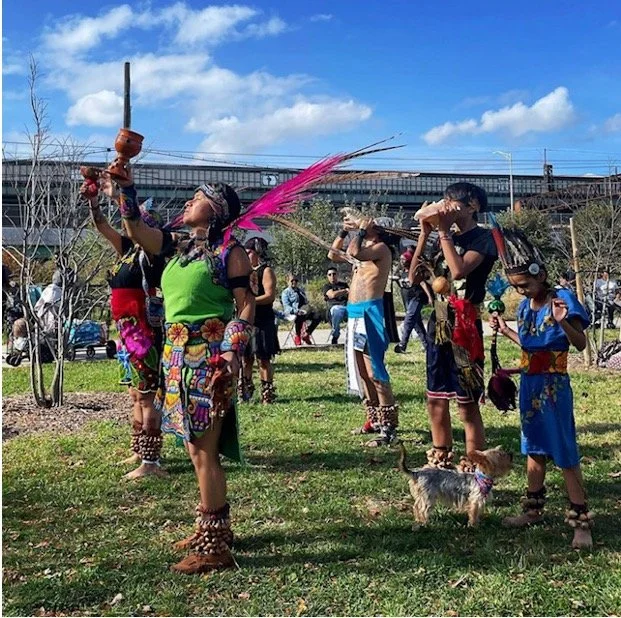
Stunning Starlight Park runs along the Bronx River and connects the country’s poorest congressional district to the waterfront. Full of fields and maturing trees, it also boasts a multi-purpose synthetic turf, two playgrounds with spray showers, picnic areas, basketball courts, and a dog run. There are floating docks, and eight months of the year a kayak and canoe launch site provides access to the city’s only freshwater river. And, since 2023, Starlight has been connected to the Bronx River Greenway and home to the Bronx River House, a 7,000-square-foot educational facility operated by Scherman Foundation grantee, the Bronx River Alliance.
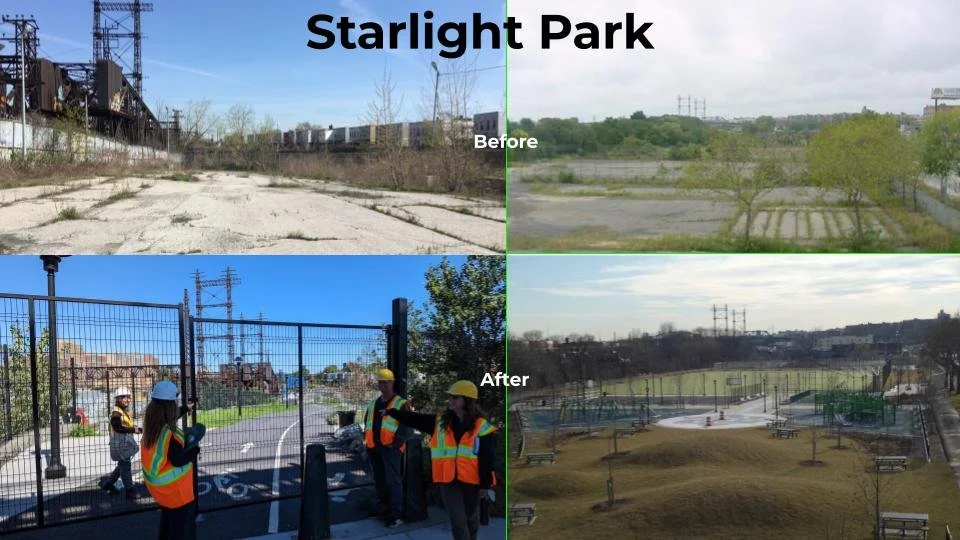
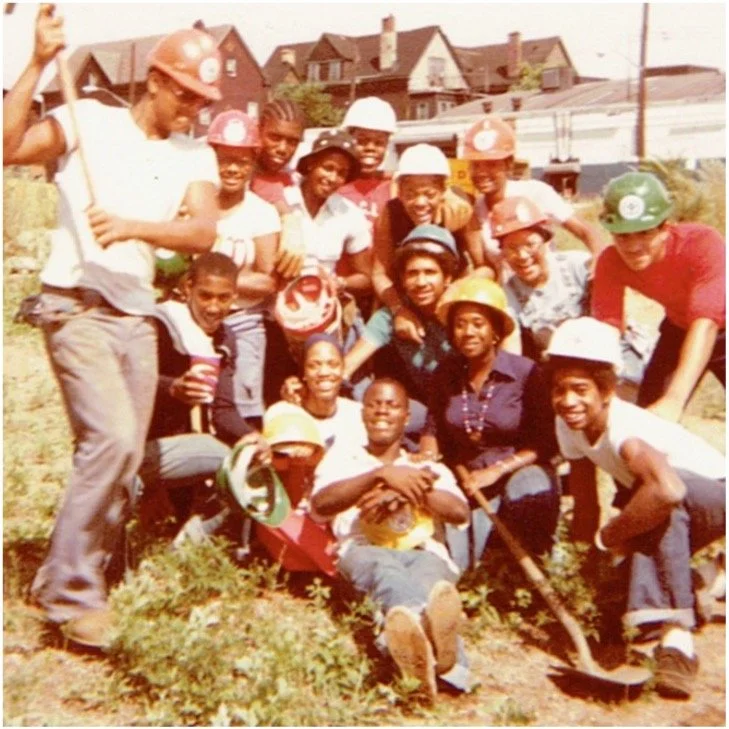
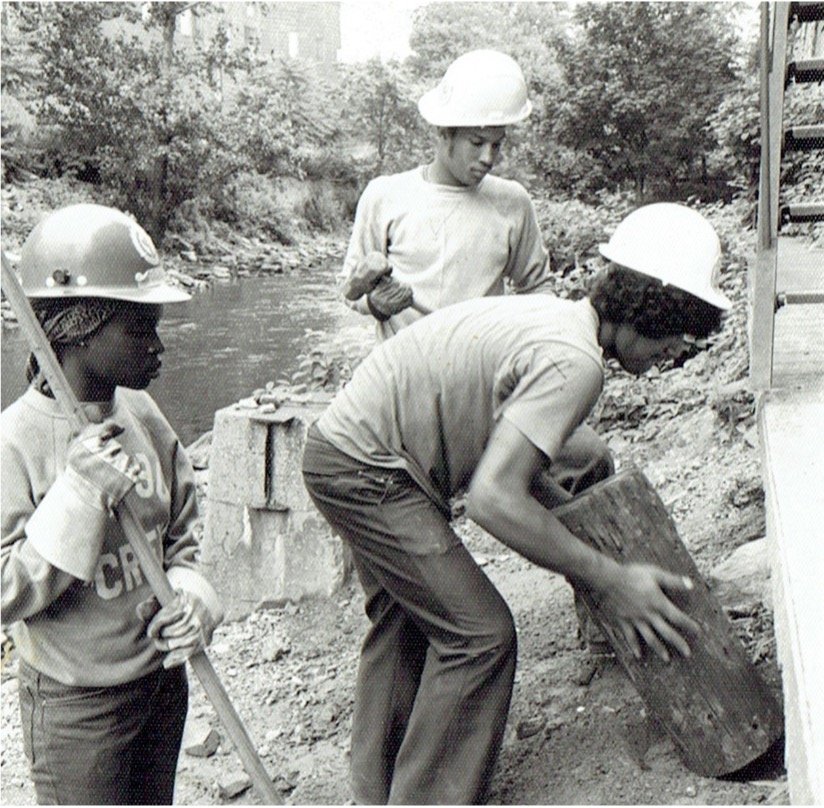
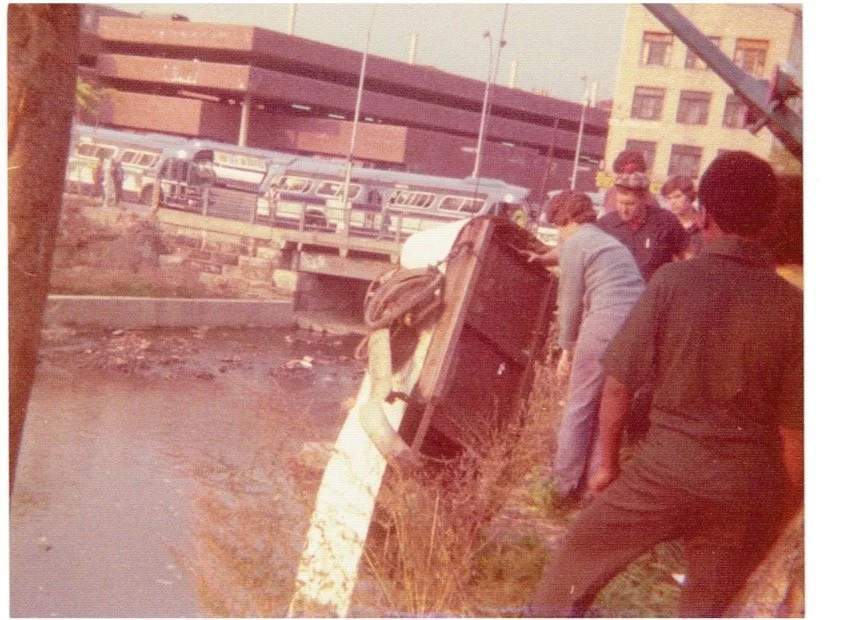
Starlight Park before and after; courtesy of Bronx River Alliance
The 13-acre green space wasn’t always like this. It has taken half a century, extensive environmental remediation, and $41 million in recent renovations for Starlight to become a verdant gem and one recently enhanced with 140 new trees and 12,000 new shrubs. The land was an early and dark symbol of urbanization and rising industrialization. In the mid-19th century, it was a dumping ground for grain and paper mills, and later a manufactured gas plant, before becoming the first Starlight—an amusement park that operated for nearly two decades before shuttering in 1940. In the subsequent decades, it was a literal open sewer—a repository for everything from old tires to abandoned cars and refrigerators to the detritus of the narcotics trade.
What stands today took time and represents the tenacity of young environmentalists, including a then teenage David Shuffler, who once told The New York Times that when he was 14 years old, all he wanted to do was play basketball on the street and go to Starlight Park, which was then a dimly lighted, dusty sliver tucked between the Bronx River and the Sheridan. He is now executive director of Scherman grantee Youth Ministries for Peace and Justice.
As a slightly older teen, Shuffler also wanted to revitalize the river. “I was fifteen,” he told Jill Jonnes, the author of “South Bronx Rising,” “going down to the Bronx River waterfront, sitting on a partially submerged car, planning how to clean up the river. There shouldn’t be cars in our river or tons of debris.”
Others also refused to accept the status quo in a neighborhood nicknamed “asthma alley.” They were tired of the traffic, the heat, and the horrific air and water pollution. And they were not going to stay silent. They did not have the political power of urban activists in more affluent areas, but this did not deter them.
“A generation of people came up locally,” said Joan Byron, the former director of policy at the Pratt Center for Community Development, a Scherman grantee that works to build community power and ensure equitable resource distribution for low-income BIPOC people in New York City. “And by the mid-1990s, there was an emerging grassroots environmental justice movement that began naming all the harms facing the community,” she added. “Asthma was endemic—not because of genetics but because of racism and unequal power. For decades, low-income neighborhoods of people of color were subjected to dumping that no one else wanted. The community could barely breathe.”
With support from Scherman, the Southern Bronx River Watershed Alliance (SBRWA) was formed in 1999. It included partners from community-based organizations, including Mothers on the Move, THE POINT CDC, Tri-State Transportation Campaign, We Stay/Nos Quedamos, Pratt Center, and Youth Ministries for Peace and Justice. For twenty years, the SBRWA worked to transform the Bronx River Waterfront, where Starlight Park now shines.
This included challenging the $1.7 billion Hunts Point Access Improvement Project to reconstruct and extend the Sheridan Expressway into Hunts Point Market, the world’s largest food distribution center. The Southern Bronx River Watershed Alliance wanted the highway demolished, the land used for affordable housing, and a massive continuous park. They also wanted a direct access route—with a ramp at Oak Point—to the food distribution center; this would get trucks off local streets where air pollution was already problematic. Instead, there was a compromise: The expressway was converted into Sheridan Boulevard. It is big, with more than four lanes, which is not ideal. But it does have sidewalks and crosswalks and connects neighborhoods to the Bronx River waterfront, Concrete Plant Park, and Starlight Park.
“On some levels, the Sheridan transformation was a win,” said Elena Conte, a consultant at the Bronx River Alliance. “Still, it was difficult not to feel somewhat devastated after two decades. The ramp was placed at Edgewater Road, where it increases truck traffic and noise and air pollution, disrupts local businesses, and endangers pedestrians,” she added, noting that a silver lining surrounds this loss. “But the community is better organized than ever. We know the value of coming together as organizations, and we know that we must protect the parks.”
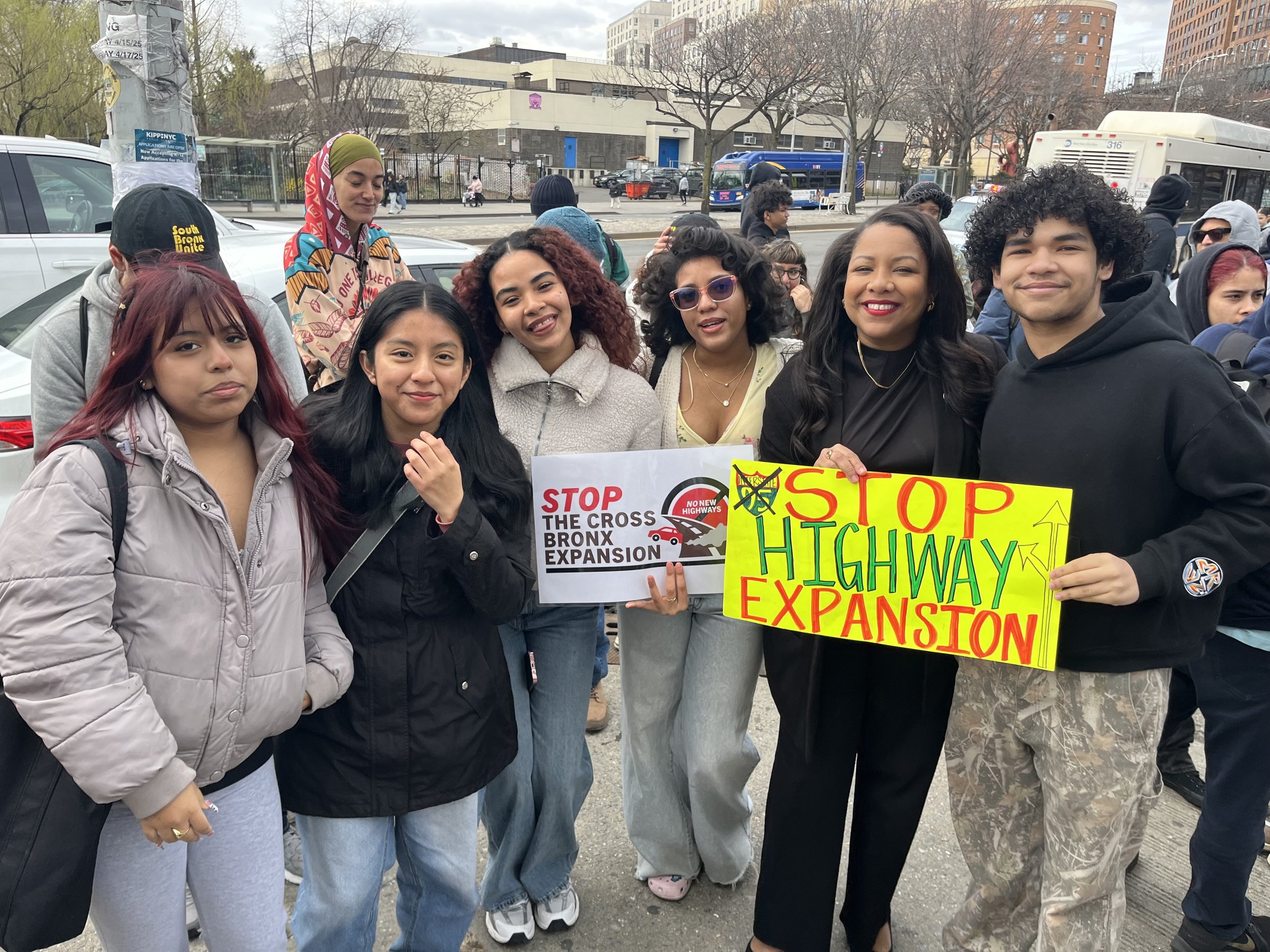
Members of THE POINT’s youth organizing group, A.C.T.I.O.N, protest Cross Bronx Expressway expansion.
Today there are real threats to Starlight. Among the largest is a $900 million rehabilitation and replacement project that would expand the Cross Bronx Expressway by up to 50 feet. The New York State Department of Transportation (NYDOT) states that the project will “modernize the five structures, enhance safety within the project limits, and improve transportation options along the corridor.”
Climate justice leaders caution that any expansion will exacerbate inequality. “We are committed to ensuring that New York State does not repeat past environmental mistakes,” said Dariella Rodriguez, director of community development at THE POINT, another Scherman grantee. Rodriguez is concerned that the project will intensify highway use and add to the air quality and health challenges facing South Bronx residents. “Rather than prioritizing vehicles throughout, our vision centers community health.” She notes that seemingly innocuous language often veils hidden threats. “Even when projects are described as standard repairs, that can mean capacity expansion and highway intensification.”
Such intensification would be brutal for the 3,000 residents of Bronx River Houses, a public housing project within 100 feet of the proposed widening. “The community stared at us in disbelief when we told them about the proposal,” recalled Conte. “They are so close to the highway that they can’t even open their windows. The level of toxicity is unimaginable—nothing can filter the density of that particulate matter. People are trapped.” Starlight Park, she said, offers a much-needed escape. “The South Bronx doesn’t have enough open space per capita so it’s a place of respite. The park needs to be treated like the precious resource it is. Anything that would jeopardize it or the river will take us backwards.”
The NYSDOT’s own environmental assessment states that widening the Cross Bronx could increase truck traffic by up to 33% during peak times and have detrimental health and environmental impacts for 64,000 local residents.
Rodriguez believes a full environmental impact statement (EIS) must be conducted to better understand air quality and health needs. “Our goal,” she said, “is to prioritize safety and preserve local green spaces like Starlight Park.” THE POINT is a member of the Stop the Cross Bronx Expansion Coalition, which launched at Starlight Park in December 2024. It now boasts more than 30 members, including Mothers on the Move, Youth Ministries for Peace and Justice, Tri-State Transportation Campaign, and Nos Quedamos, who were all part of the Southern Bronx River Watershed Alliance.
photo courtesy of Bronx River Alliance
In early October 2025, the Coalition celebrated a significant victory. The NYSDOT scrapped a longtime plan to build an entirely new overpass that would divert traffic for four years during bridge repairs. This plan would have cut down trees, created a roadway hanging over Starlight Park, and symbolized a demoralizing regression to much of the community. The Coalition continues to oppose the state’s revised plan and urges that anything beyond bridge repair will be detrimental to the surrounding communities.
Climate leaders are pleased but not surprised by their successes. “There is incredible local and hyper local power in the Bronx’s community-based organizations,” said Conte. “Their energy, ingenuity, drive, passion, and clarity have been and remain the spark for historic wins.”
All carousel photos courtesy of Bronx River Alliance