
Confronting the catastrophe of Callais and why civil rights leaders won’t forsake the fight for voting rights
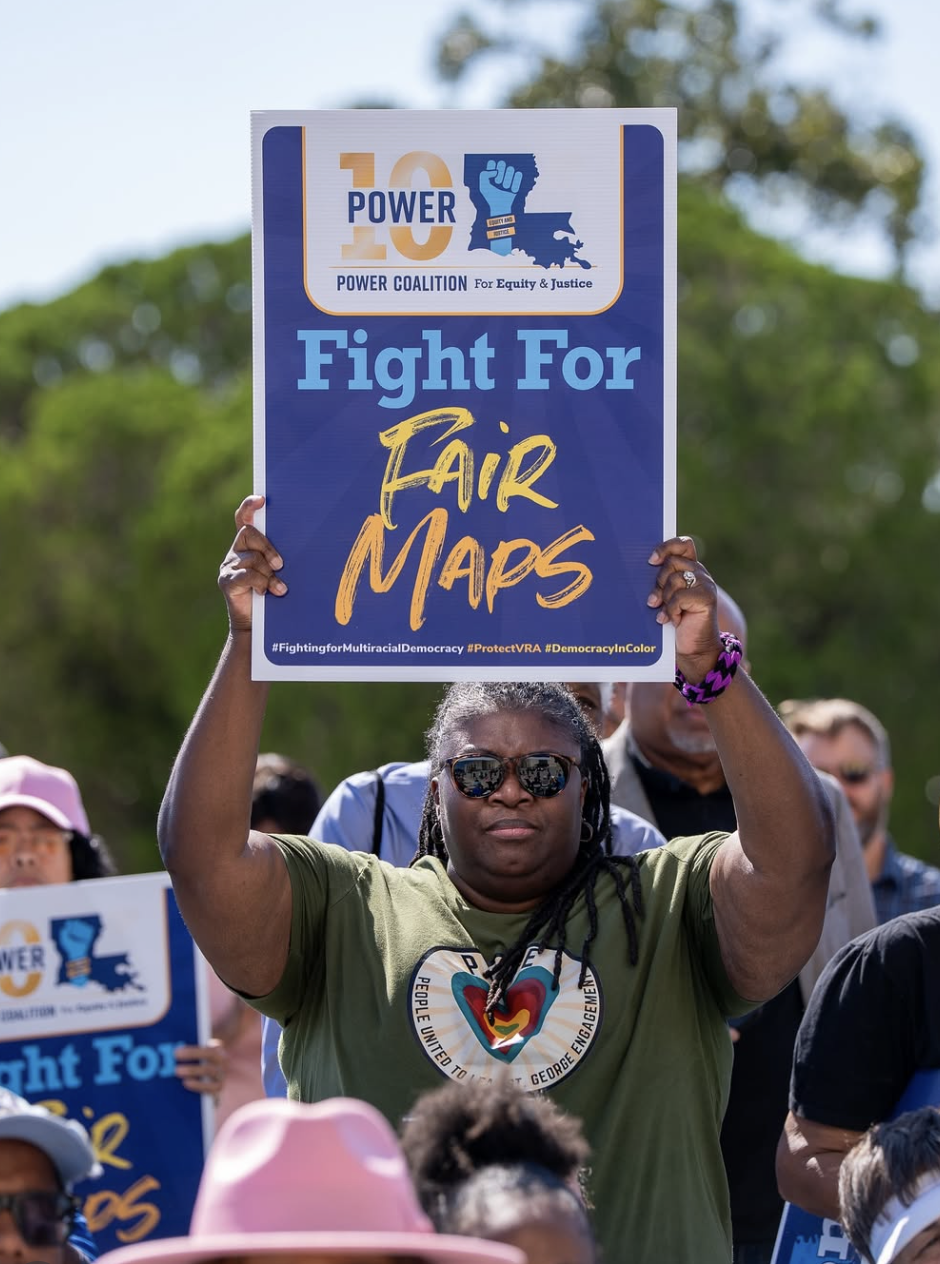
The Power Coalition for Equity and Justice, a Louisiana state table, champions fair maps at the capital. (Courtesy of State Voices)
An early season heat wave on May 16th couldn’t keep thousands of people from descending on Montgomery, the capital of Alabama and the birthplace of the modern Civil Rights Movement. They came by car, by bus, by plane, and by conviction for “All Roads Lead to the South.” The day of action was organized by a coalition of national and civic engagement groups, including Scherman grantee State Voices, who mobilized in the weeks after the Supreme Court gutted the last remaining section of the Voting Rights Act in Louisiana v. Callais. The decision, wrote Justice Kagan, “threatens a half-century’s worth of gains in voting equality.”
As attendees headed to the Edmund Pettus Bridge, named after a KKK grand dragon turned Alabama senator, they paid powerful tribute to a March 1965 voting rights march. On that day, state troopers sprayed some 600 unarmed protestors with tear gas and beat them with billy clubs. Among the victims were 25-year-old John Lewis who suffered a skull fracture and bore the scars from Selma’s Bloody Sunday for the rest of his life. He would go on to serve seventeen terms as a Georgia congressman, but not until something was done to rectify a glaring reality—white supremacists praying at the altar of segregation would bear arms to keep Black voters from fully participating in democracy.
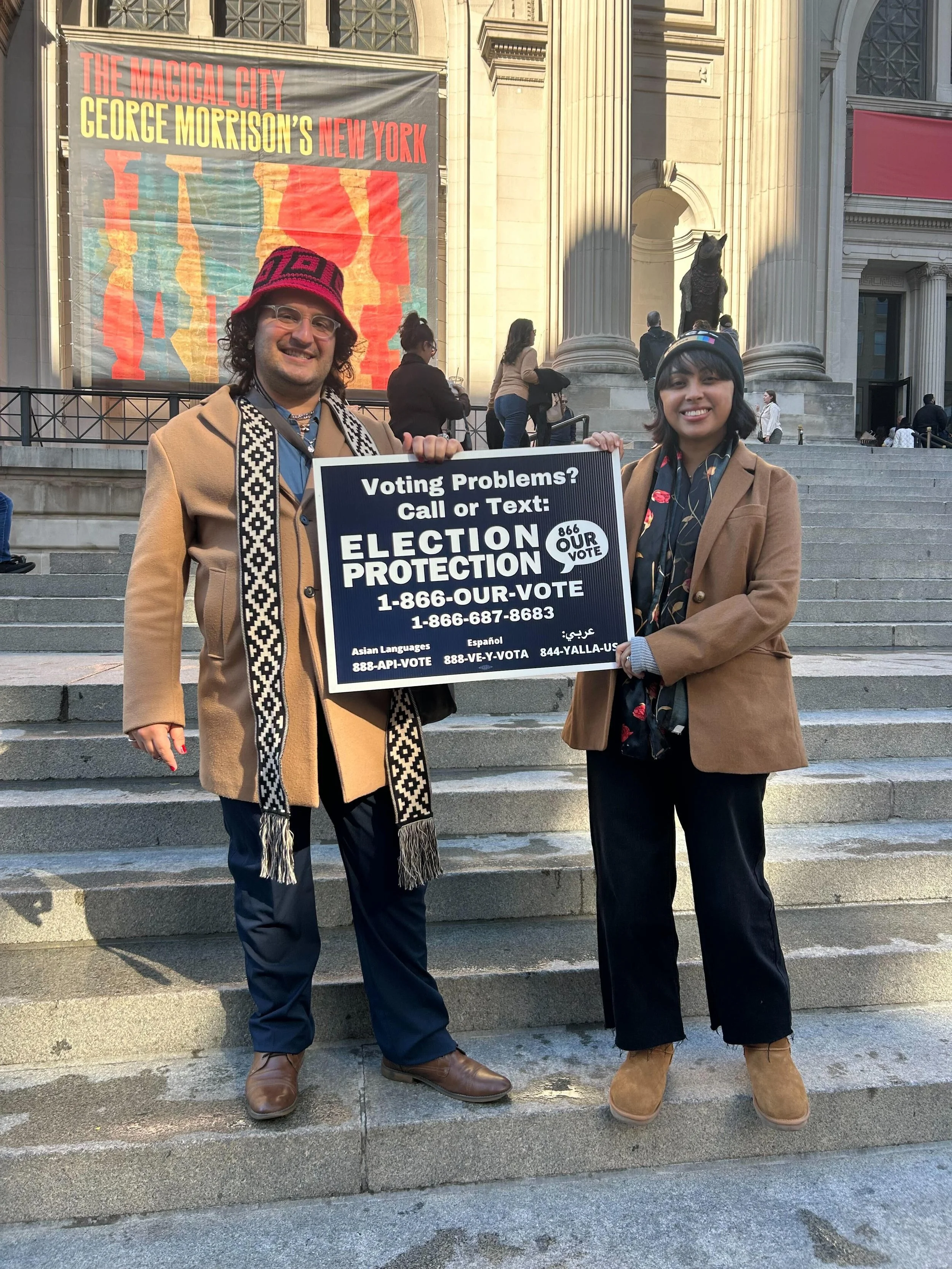
NYCET staff at an October 2025 press conference to elevate an election protection hotline. (Courtesy of NYCET)
The legislative crown jewel of the civil rights movement
The Voting Rights Act of 1965 (V.R.A) was signed into law five months after Bloody Sunday. President Johnson called the legislation a “triumph for freedom,” promised that it would provide millions of Black Americans with the right to vote, and noted that it would pave the way for the descendants of formerly enslaved people to have “control over their own destinies.” Johnson did not use the word “finally” in his speech to Congress, but it would have been appropriate. A century earlier the 15th Amendment gave Black men—and just men—the right to vote, but it was rife with legislative loopholes; these enabled voter suppression tactics—literacy tests, poll taxes, all-white primaries and grandfather clauses—that made it as buoyant as a deflated balloon punctured with pins. The South’s Jim Crow laws ensured that all people of color were excluded from the process until well past the middle of the twentieth century.
As a formidable shield against such schemes, the Voting Rights Act hammered the final nail in the coffin of American apartheid. Section 5—it was struck down in 2013’s Shelby County v Holder—mandated “preclearance,” which served as a prophylactic against the disease of discrimination. Jurisdictions with a history of the illness had to prove their health to the Department of Justice and demonstrate that any proposed changes—e.g., redistricting or new voting procedures and practices—were neither motivated by nor would result in discrimination. In this way, the burden was on offenders with a racist record and not on those who had experienced centuries of historic marginalization.
The now dismantled Section 2 prohibited voting practices or procedures that discriminate based on race, color, or membership in a designated language minority group. Under this rubric were the creation of discriminatory maps or gerrymandering—primarily by cracking disfavored voters across multiple districts or packing them into as few districts as possible—that allowed politicians to choose voters rather than the other way around. Unlike Section 5, which protected voters of color before discriminatory voting practices were put in place, Section 2 could be leveraged as a sword after a voting change was implemented. It also required certain states to create majority-minority districts to remedy vote dilution and ensure minorities had a fair chance to participate in the political process.
“The purpose of Section 2 was to breathe life into the promise of the 15th Amendment,” said Cesar Z. Ruiz, associate counsel at Scherman partner LatinoJustice PRLDEF, which leverages laws and litigates to create a more just and equitable society. “Before passage there was almost no Black or Latino representation in Congress, but then huge strides were made in meeting that mandate. Section 2 armed people with the tools to actualize the promise of an equal vote and enabled them to elect candidates of their choice.”
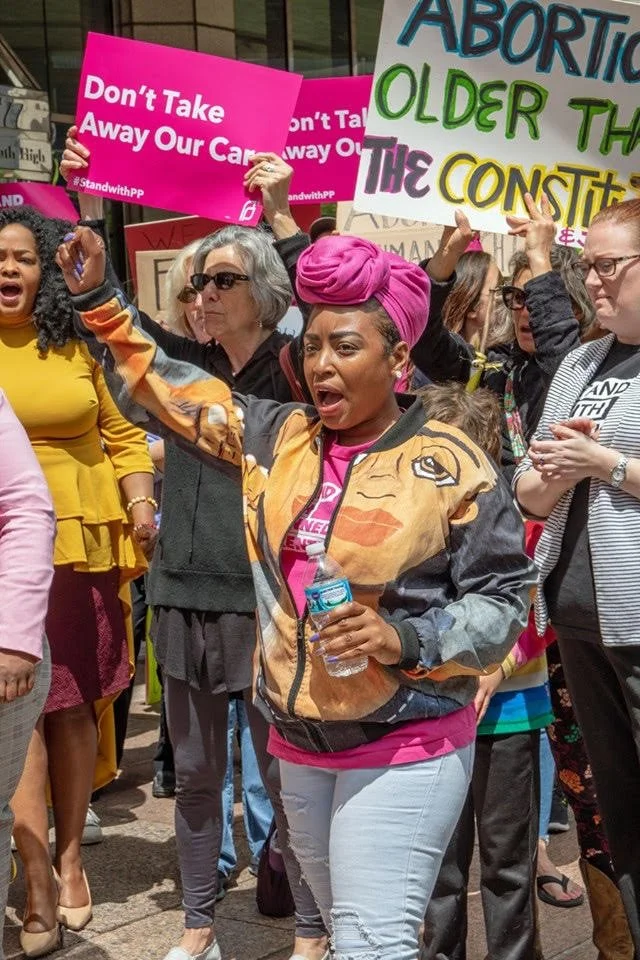
Rhiannon Carnes leads demonstrators demanding abortion rights. (Courtesy of Ohio Women’s Alliance)
The supremacy of the court
By statute, the Supreme Court term begins on the first Monday in October. High-profile opinions are often delivered in late June or early July before the Court recesses for the summer. The decision in Louisiana v. Callais came in late April. This was both surprising and deliberate.
“The intention was to catch people off guard,” said Karla Bradley, of the New York Civic Engagement Table (NYCET), a Scherman grantee that builds power with communities of color, immigrants, and poor and working people. “The writing was on the wall since last summer’s mid-cycle redistricting fight, but delivering the blow when people weren’t expecting it made it harder to respond.”
Callais catalyzed confusion and chaos. Galvanized by the decision, states began tinkering with maps as if they were engaged in a real-life version of Risk. On April 29th, the day of the decision, Florida legislators adopted a new Congressional map that created up to four Republican-leaning seats. The very next day, the governor, infamous for sweeping omnibus voter suppression bill S.B. 90, signed it into law, smug and sanctimonious as he wrote Signed, Sealed, and Delivered on X. On May 8th, Alabama state officials petitioned the Supreme Court to allow a map that would flip another Democratic seat; weeks later the court consented, reversed its own 2023 decision, and cleared the path for the state to eliminate a majority-Black congressional district. In her dissent, Justice Sotomayor wrote that the decision “debases the democratic process” and would lead to “a chaotic election, held under a never-before used Congressional map that intentionally discriminates against Black Alabamians.” And in Louisiana, House primaries were halted after ballots had been cast; the president praised the governor on Truth Social for showing “tremendous vision, Strength, and Leadership” and urged him to “keep up the great work.”
“With Callais, the Supreme Court said it’s okay to pack and crack Black and Brown voters out of any kind of meaningful political power as long as you give a side wink and say it’s for partisan purposes,” said Miranda Galindo, senior counsel at LatinoJustice. Her organization was a signatory on a Rucho v. Common Cause amicus brief that urged the Supreme Court to keep discrimination based on extreme partisanship out of the redistricting process and has litigated against Florida’s voter suppression laws since 2019. “Callais unleashed redistricting wars, upending the ability of Black and brown voters to elect their candidates of choice. We’re now living in the upside-down world.”
In this upside-down world, the Court isn’t hiding its hypocrisy. Instead, it has finally taken off its mask, revealing that it cares about voter protection—for white people; that it is opposed to racial gerrymandering—but only the kind that dilutes white power; and that it is committed to dismantling discrimination—but only the variety that affects white people who are the least likely to be on the recipient line of racism. Two recent cases illustrate these points. In February 2022, nearly four months prior to a primary, the Court blocked the creation of two minority opportunity districts in Alabama. “Late judicial tinkering with election laws,” wrote Justices Kavanaugh and Alito, “can lead to disruption and to unanticipated and unfair consequences for candidates, political parties, and voters, among others.” In early December 2025, the Court stayed an order that blocked Texas’ gerrymandered map, noting that “the District Court improperly inserted itself into an active primary campaign, causing much confusion and upsetting the delicate federal-state balance in elections.” That primary was scheduled for March of the following year.
“This decision was a slap in the face and a painful reminder that things really haven’t changed,” said Alexis Anderson-Reed, a Scherman trustee and the president and CEO of State Voices, a nonpartisan network of 24 state-based coalitions. Growing up, Anderson-Reed spent summers in Memphis learning how segregation affected her father. He entered buildings using “colored” entrances and was permitted in certain white-owned businesses just once a month. “The V.R.A. created the semblance of a democracy, but in Tennessee, which quickly eliminated the one Democratic, Black-majority congressional district, that was taken away in eight days.”
Other Scherman partners reiterate that while laws move us closer to rights, they can be repealed and rolled back, making it foolish to assume they are sufficient to sustain democracy. “There’s a saying in the reproductive justice space,” explained Rhiannon Carnes, founder and executive director of Ohio Women’s Alliance, a Scherman partner. “When they come for bodily autonomy, they will come for civil rights, including voting rights,” she added, referencing the 2022 Dobbs case, which overturned the federal constitutional right to an abortion. Carnes will keep fighting. “Black people and our ancestors have been in the fight for equality since the country was created,” she said. “We won’t stop, and we’re going to use the same power building strategies and tools to make sure we win.”
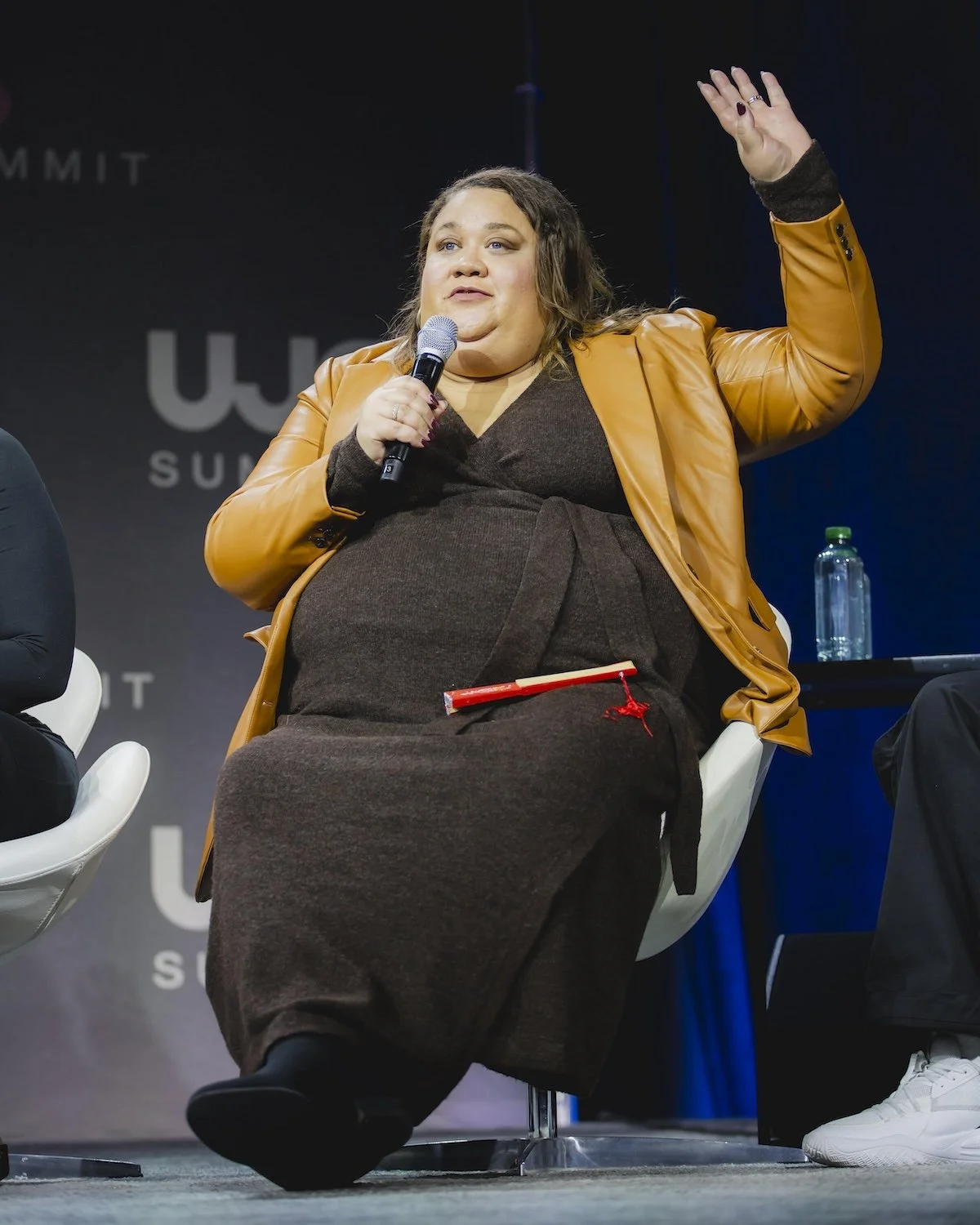
Alexis Anderson-Reed speaks at the United Justice Coalition Summit (Courtesy of State Voices)
Building power in the streets, the states, and cities
While the nation’s highest tribunal appears hell bent on destroying its own legitimacy, social justice leaders have long warned that it is not to be trusted. In 1883, Frederick Douglass denounced the Court’s decision to strike down the Civil Rights Act of 1875. “[It] is the autocratic point in our National Government,” he said. “No monarch in Europe has a power more absolute over the laws, lives, and liberties of his people than the Court has over our laws, lives, and liberties.”
Today, as the United States distances itself from democracy, Douglass’ words ring true. “Callais is textbook authoritarianism,” said NYCET’s Bradley. “If you are an authoritarian trying to maintain your power, the next step isn’t necessarily to stop an election from happening—it is to make that election more favorable to your regime.”
Though angry and sad, Scherman partners have postponed mourning to move forward. They are emboldened by the fact that the face of the nation is changing—minority births are now the majority—and that the country has met this moment before—particularly following periods of progress for people of color. “This is authoritarian, white supremacist backlash,” said Anderson-Reed, who added that it’s not unprecedented. Jim Crow laws followed Reconstruction era reforms that benefited Black Americans. “It doesn’t mean that we did something wrong—it means that we were doing something right.” Case in point: the president and his party became obsessed with gerrymandering last summer when public opinion began to turn on them.
Dr. Regina Davis Moss, President and CEO of In Our Own Voice: National Black Women’s Reproductive Justice Agenda, concurs, noting that states engaged in redistricting wars are focused on districts precisely because they are largely Black and largely democratic. Black women, she added, are a force to be reckoned with and some of the most reliable voters, showing up in the primaries, runoffs, and off-year elections that many people skip. “There’s a lot that can still be done in terms of state and local-based voting rights acts,” said Davis Moss, who leads 12 partners across 11 states, uplifting the voices of Black women and reproductive justice leaders. “We’re focused on places where we can have an impact. We’re also normalizing good reproductive justice policy, spotlighting elected officials who represent us, and educating people so they know what to look for in candidates.”
State voting rights acts (SVRAs)—California passed the first one in 2002—are a particularly powerful shield as federal protections are obliterated. At present, ten states—California, Colorado, Connecticut, Illinois, Maryland, Minnesota, New York, Oregon, Virginia, and Washington—have their own Voting Rights Acts to combat discrimination. An additional 13 states—Alabama, Arizona, Georgia, Florida, Louisiana, Michigan, Mississippi, Missouri, New Jersey, Oklahoma, Rhode Island, Texas, and Vermont—have introduced a SVRA. LatinoJustice has had a hand in many of these efforts. In New York it helped pass—and has litigated to enforce—the John R. Lewis Voting Rights Act in 2022, which requires preclearance and strengthens language-access protections. In Connecticut, it supported the campaign for the SVRA, which was enacted in 2023 and is considered the nation’s most comprehensive state-level voting rights act. It is drafting the SVRA for Pennsylvania and providing testimony to support bills in Michigan, Rhode Island, and Vermont. And in partnership with the Legal Defense Fund, the Campaign Legal Center, the Election Law Clinic at Harvard Law School, and Asian American Legal Defense and Education Fund, LatinoJustice also launched a model State Voting Rights Act in January 2026; it provides states with a much-needed template to craft their own legislation and incorporate better and bolder protections for limited English proficient voters.
The work to build collective power with BIPOC women and gender-expansive folks extends beyond legislation. The Ohio Women’s Alliance provides resources so people understand how policy and legislation influence their lives and can use their voices to provide testimony and talk to their legislators. The organization also emphasizes down-ballot voting. “We know the importance of our state supreme court, which is the only reason we maintained abortion access after the Dobbs decision came down,” said Carnes. “Every time there’s an opportunity to vote, we must. Many of us don’t feel represented right now—by the president and the U.S. Supreme Court—but there are other ways to ensure our voice resonates.”
As one of the country’s only reproductive justice organizations focused on long-term voter engagement, New Voices for Reproductive Freedom believes that political activity doesn’t begin and end with elections. Using a community-centered, relationship-focused strategy, the organization engages historically underrepresented communities by casting a wide net. It hosts advocacy days, conducts canvassing, and organizes phone banking. It invites people to teach-ins that illustrate the intersection of reproductive justice and voter education. And, like the Ohio Women’s Alliance, it trains and then points burgeoning leaders toward opportunities to speak to their elected officials. What New Voices does not do is deify people running for office.
“We don’t look to candidates to save us,” said mobilization director Shelly Hunt. “We build power within each other. With mutual aid. With care and organizing. At the end of the day, we are each other’s infrastructure. And that’s where real power lives—in school boards, zoning, environmental decisions, housing, and policing. The people making decisions about our daily lives are in our own communities.” Elections matter, she said, but they are a tool and not the solution. “Systems do not feed people, house people, or protect people. That’s what we do.”
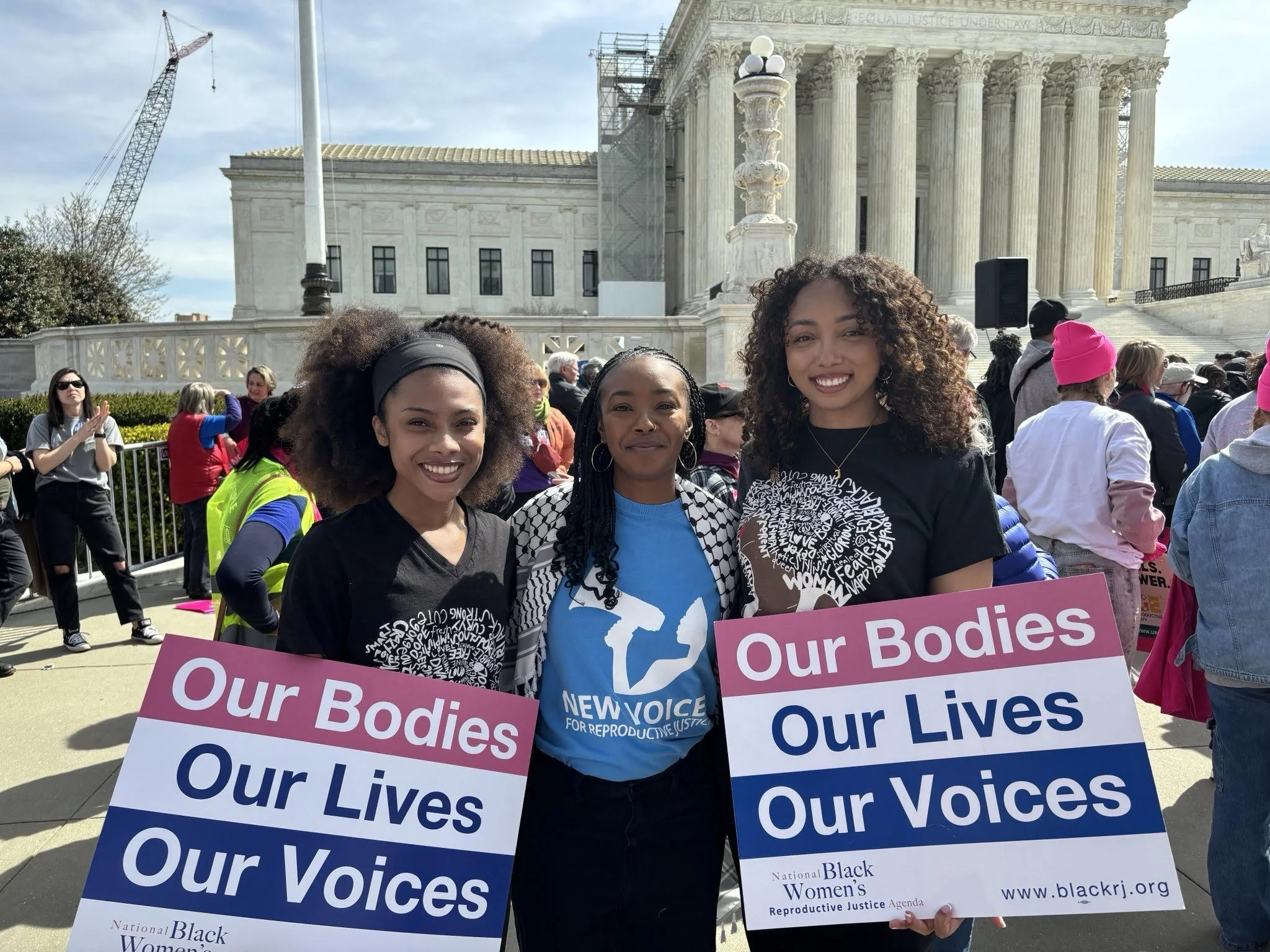
Leaders stand outside a March 2024 Supreme Court hearing on mifepristone. (Courtesy of In Our Own Voice)
Facing reality and remaining resilient
Compounded by pending legislation like the SAVE Act, which would impose additional documentation requirements to vote in federal elections, the Callais decision could cause voters—especially historically marginalized ones—to call it quits. Civil rights leaders say this would be disastrous, feeding a beast that gets fat off fear and frustration. They also urge voters to recognize that they still have power and should wield it.
“We know folks may feel hopeless, but that’s exactly what this administration wants,” said NYCET’s Bradley. She cautions that because no state is a monolith, everyone must vote—whether they are in New York or North Dakota. “They’re counting on a lack of participation. They wouldn’t be trying so hard to make it difficult to vote if our votes didn’t matter. We need a groundswell—for folks to show up in unprecedented numbers.”
Leaders recognize that voting can be an exercise in anxiety. In response, they are putting protections in place to keep people safe. That means making sure voters can get to the polls early. It means having poll monitors, neutral observers, and escorts who can bring people into polling places and de-escalate situations if national or state deployed entities—ICE, the national guard, the police, or independent actors like the Proud Boys—show up and try to intimidate voters.
The work is less telling people what they should do and more listening to their needs. “Some folks are outraged,” said New Voices for Reproductive Freedom’s Hunt. “We acknowledge that and then we say, ‘Okay, let’s make a plan, let’s figure out what can we do.” Hunt also uses data to drive change. For example, when people are shocked to learn that 22% of Cleveland voters turned out in the recent primary—and that that figure is higher than normal—she connects the dots. “Gandhi said to be the change you want to see in the world, so we ask folks, ‘Did you turn out to the primary? Did your people? Did your village?’”
At LatinoJustice, the team is pivoting. In partnership with Asian American Legal Defense and Education Fund (AALDEF), the Legal Defense Fund, and the Election Law Clinic at Harvard Law School, the organization is leaning into best practices—protecting against vote dilution using race neutral benchmarks and remedies that won’t raise red flags. “Same day voter registration and proportional representation can really improve the political power of Black and brown voters,” said Galindo, who explained that neither involves skin color or redistricting lines but both shield historically marginalized communities from the hostility of the Supreme Court.
While focused on practical solutions, Scherman’s partners are also urging imagination to conjure up a new United States that is truly of the people, by the people, and for the people. “We’ve never had a democracy that centered Black and brown voters,” NYCET’s Bradley said. “The goal should not be to go back to what we had, but to dream beyond that and create a country where people who choose to erase their constituents would never get into office in the first place.”
Top line priorities to build a multiracial democracy include efforts like the National Popular Vote Compact, which would ensure that Americans—not the Electoral College—elect the president. “This is the time to be radically innovative,” said Carnes of Ohio Women’s Alliance. “Real representation involves more than a two-party system.”
Proportional representation, which is utilized in 21 of 28 advanced western democracies, is also growing in popularity; it is a priority for grantees, including State Voices and LatinoJustice. Rather than a “winner takes all” system, voters elect winners in proportion to the share of the votes cast so that every voice is heard. For example, Washington Community Alliance, which is part of State Voices, worked on a local version of HB 2210; the bill did not pass but garnered significant attention because it would have permitted proportional ranked choice voting, nearly eliminated gerrymandering, and transformed Washington’s congressional map from 10 single-winner districts into two multi-winner districts, giving voters much more power. In Florida and Ohio, state tables are in the initial planning phases of their own Fair Representation Acts, which would also create multi-winner congressional districts. Following the November elections, State Voices will work across its network on long-term, ten-year plans to make proportional representation and other democracy reforms a reality.
“Just as some of the racist, evil ideas have become more mainstream, so have some that would build a multiracial democracy,” said Galindo. “This is a long-term project. We won’t just snap our fingers and have court reform at the federal, state, and local level, but there’s a willingness to create something better than what we had. I see the movement headed in this direction.”
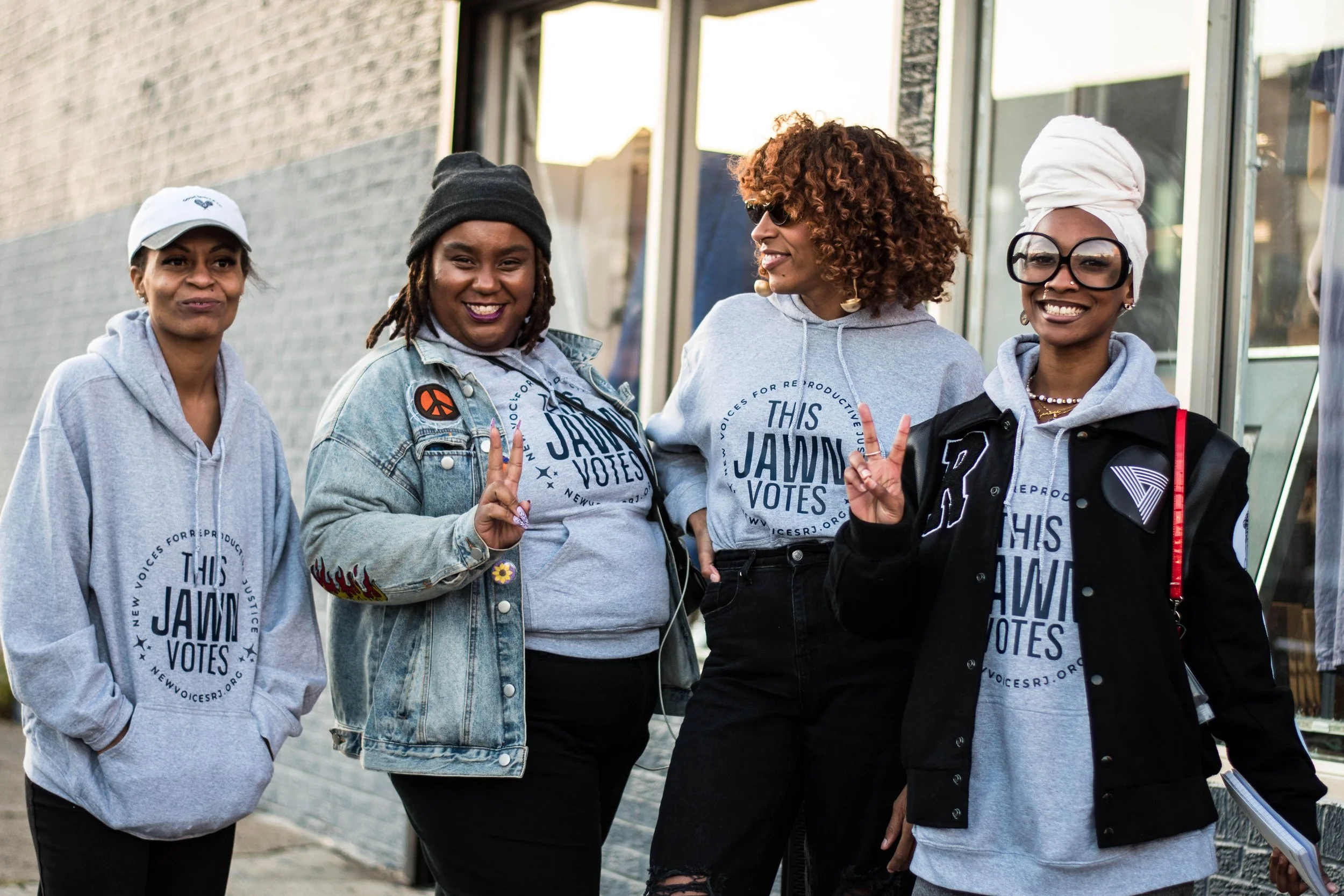
In Philadelphia, This Jawn Votes uses spoken word poetry and other art to encourage first-time voters to hit the polls. (Courtesy of New Voices for Reproductive Justice)
Same as it ever was
Three weeks after Bloody Sunday, Martin Luther King led thousands of nonviolent demonstrators on a five-day, 54-mile march from Selma. Upon reaching the steps of the capitol in Montgomery, he told the crowd that “the arc of the moral universe is long, but it bends toward justice.” This sentiment is as salient today as it was 60 years ago. It’s an important reminder that change will happen—but not overnight. The path to success will be riddled with setbacks, including the present surplus. “We will be in this for a long time,” said Anderson-Reed, “but what we’ll come out with will be better.”
Scherman’s democracy partners are committed to building a better future but are also focused on imminent crises. To steer ships into safe harbor this midterm season, the latest Response Fund grantees—Michigan Voices, Pennsylvania Voice, State Voices, Ohio Voice, and We the Action—are leading extensive election protection work, voter engagement efforts, poll worker protections, election defense, and post-election legal efforts.
“We may not live to see some of the things we’re fighting for but that’s not new for Black people,” said In Our Own Voice’s Davis Moss. “My ancestors also experienced injustice, but their drive to make things better for the next generation kept them going.” This combination—of purpose, perseverance, and perspective—is evident in all the leaders Scherman supports. “The nature of movement work is cyclical,” said LatinoJustice’s Ruiz. “It’s a pendulum, and it swings. This is a visceral one, but history has shown us that it will come back.”
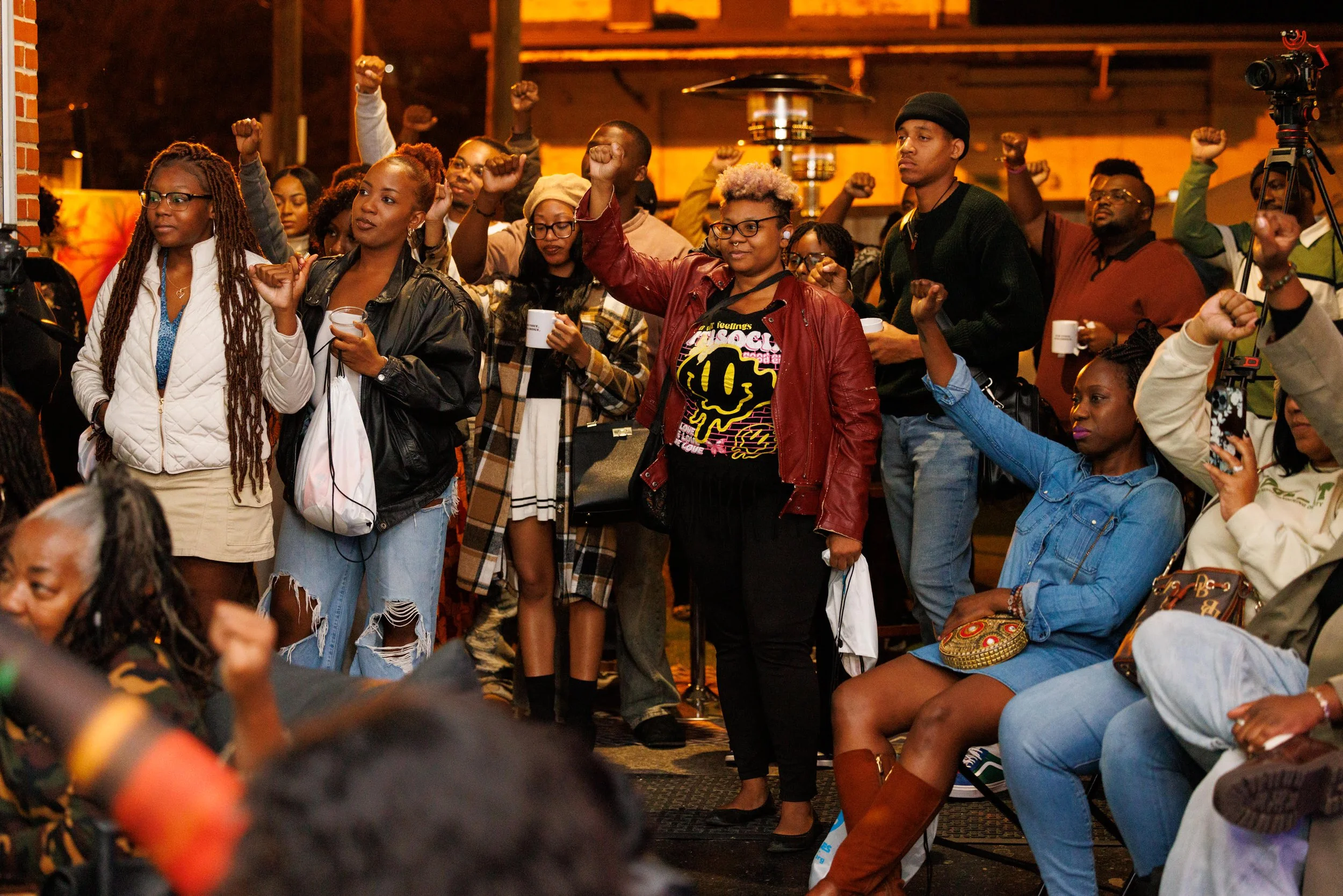
Leaders gathered in advance of the 2024 presidential election for “Our Power is Political” (Courtesy of New Voices for Reproductive Justice)